Choosing a home building contractor for land you already own is different from choosing a builder in a subdivision. Your contractor is not just assembling a house. They are helping turn a piece of property into a buildable homesite, which may involve access, drainage, utilities, soil conditions, permits, structural engineering, and a realistic plan for how the building will actually be constructed.
That matters even more in Oklahoma, where clay soils, wind exposure, storm season, rural utility access, and jurisdiction rules can all affect the final build. Whether you are planning a barndominium, a shouse, a custom metal building with living quarters, a detached garage with a future apartment, or a traditional home on acreage, the right home building contractor should understand both the structure and the land underneath it.
Here is how to evaluate contractors before you commit.
Start with a land-first contractor, not just a house plan
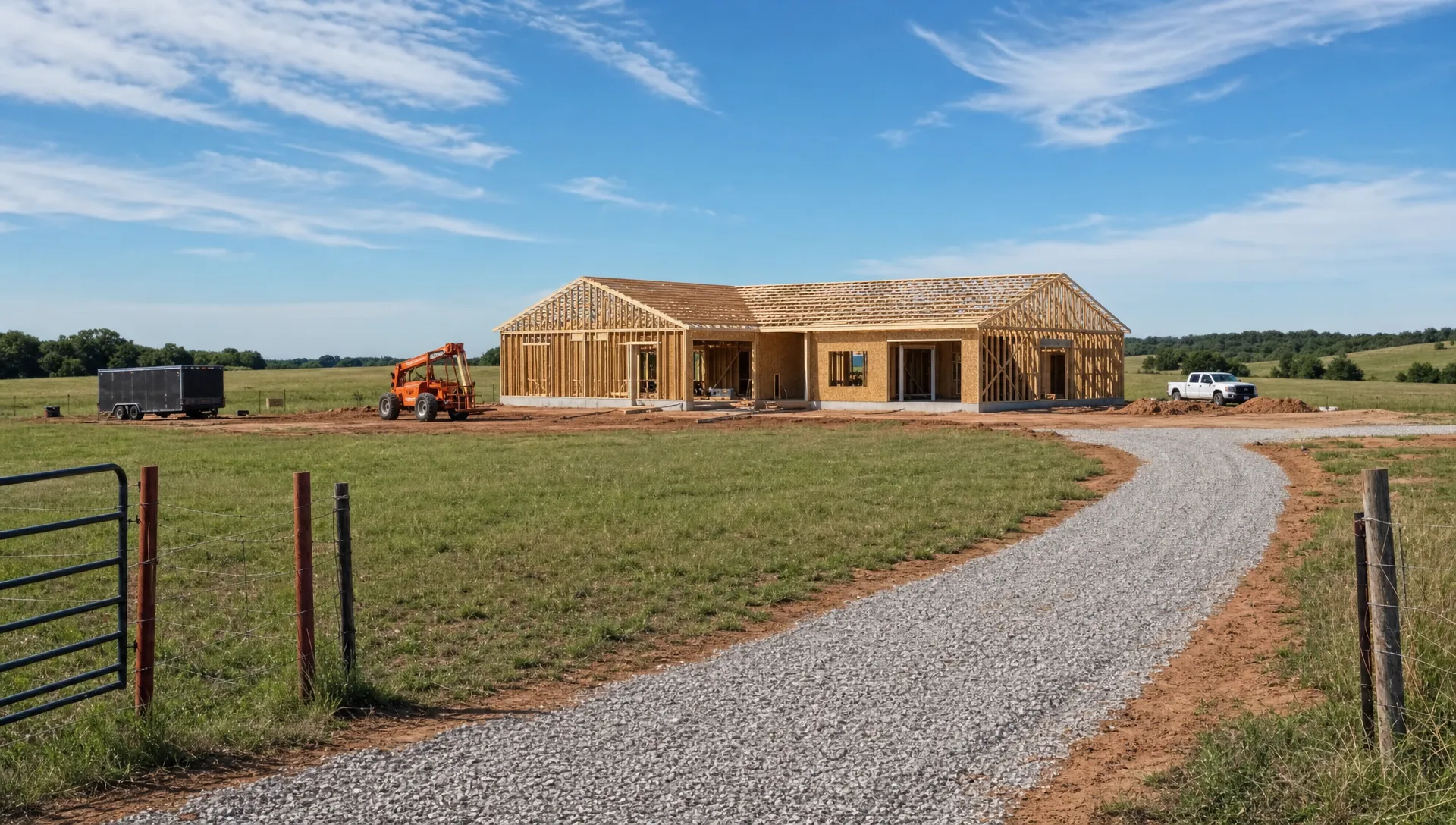
Many homeowners begin with floor plans, finishes, and inspiration photos. Those are important, but land should come first. A good contractor will want to understand your property before promising a timeline or scope.
For rural acreage and semi-rural properties around Tulsa, Broken Arrow, Bixby, Owasso, Claremore, Sapulpa, Skiatook, and northeast Oklahoma, early site questions can include:
- Is there reliable road access for trucks, equipment, and deliveries?
- Where will the building sit in relation to slope, drainage, and trees?
- Are utilities already available, or will power, water, septic, gas, or propane need to be planned?
- Is the property inside city limits, county jurisdiction, or an HOA-controlled area?
- Are there easements, setbacks, floodplain concerns, or driveway requirements?
If a contractor talks only about the building and never asks about the land, that is a warning sign. The building site can affect foundation design, schedule, access, and the order of construction.
For a broader Oklahoma-specific overview, Summit’s guide to the building a home process for Oklahoma landowners explains how due diligence, rules, engineering, and permits fit together before construction begins.
Decide what kind of build you really need
Before comparing contractors, define the project clearly. “Home on land” can mean many different things, and not every builder is set up for every type of project.
A contractor experienced with custom land builds should be able to talk through options such as barndominiums, shop-houses, metal building homes, detached garages, RV or boat storage, workshops, agricultural buildings, hangars, and outdoor living additions. The right fit depends on how you plan to use the property now and later.
For example, a family building a barndominium may need living space, garage bays, covered porches, storm shelter planning, and future expansion space. A landowner building a shouse may care more about clear-span shop area, tall overhead doors, insulation, and utility placement. A pilot planning a private hangar will need different door, slab, access, and clearance considerations than someone building a detached garage.
The more specific you can be about your use case, the easier it is to find a contractor with the right experience.
Look for one point of accountability
Land builds involve a lot of moving parts. Site preparation, foundation work, framing, roofing, utilities, mechanical systems, insulation, interior finish-out, inspections, and trade scheduling all need to line up. If nobody is clearly responsible for coordinating the whole project, delays and finger-pointing can happen quickly.
A true general contractor should manage the construction process, coordinate trades, pull required permits, schedule inspections, and keep the project moving from the ground up. That does not mean the contractor personally performs every trade. It means there is one accountable party managing scope, sequence, communication, and quality.
This is one of the biggest differences between hiring a home building contractor and buying a basic building package. Kit sellers, shell builders, and specialty crews can be useful in the right situation, but a custom home or live-in shop-house on land usually needs a broader construction plan.
If you are not sure what a GC should handle, this article on what a general contractor company handles on your build is a helpful reference point.
Ask how the foundation is planned, not just poured
For any permanent building on Oklahoma land, the foundation deserves serious attention. Expansive clay soils, drainage, building loads, wind exposure, and code requirements can all affect the foundation strategy.
A stronger contractor conversation should include engineering, reinforcement, elevation, drainage, and how the slab or foundation supports the building system. This is especially important for barndominiums, metal buildings, shops, garages, hangars, and commercial structures, where the foundation and frame need to work together.
For Summit projects, concrete is not treated as a separate add-on for standalone flatwork. It is part of the building system when a structure is being built. Summit’s experience with engineer-spec foundations, including reinforcement practices suited to Oklahoma conditions, is one of the reasons the company can manage builds from the ground up.
Make sure they understand local rules and permits
A contractor who builds on land in Oklahoma needs to understand that rules can change by location. Building inside Tulsa city limits is not the same as building in unincorporated county land. An HOA-controlled acreage neighborhood may have restrictions that a rural parcel does not. A property near a floodplain, highway, or utility easement may require additional review.
Ask whether the contractor regularly works in your area and whether they are comfortable handling the permitting process. In many cases, this is where local experience makes a real difference. A contractor familiar with Tulsa and surrounding communities can help you avoid surprises before construction starts.
Summit builds in the Tulsa area and across Oklahoma, including projects within Tulsa city limits. That city-limit experience matters because some builders avoid those projects due to permitting complexity.
Compare bids by scope, not by the bottom line
The cheapest bid is not always the best value. A low number may leave out site work, engineering coordination, permit handling, foundation requirements, insulation, finish-out details, or utility coordination. When you compare contractors, compare what is included, what is excluded, and who is responsible for each step.
Use this kind of framework when reviewing proposals:
| Bid item | Why it matters | What to ask |
|---|---|---|
| Site preparation | Land access, drainage, and building pad conditions affect the whole project | What site work is included before foundation work begins? |
| Foundation scope | The foundation must match soil, structure, and engineering needs | Is the foundation engineered for this building and location? |
| Building system | Barndominiums, shops, and metal buildings need structural coordination | Who is responsible for framing, shell, roof, and openings? |
| Permits and inspections | Jurisdiction rules can affect schedule and approval | Who pulls permits and manages inspections? |
| Finish-out | Interior work can vary widely between bids | What level of interior completion is included? |
| Trade coordination | Delays often happen when trades are not sequenced well | Who schedules and manages subcontractors? |
| Exclusions | Missing items can become costly later | What is not included in this proposal? |
A reliable contractor should be willing to explain the scope in plain language. If you feel like you are comparing one complete build against one partial shell, pause before making a decision.
Ask about engineering and design coordination
A good contractor does not need to pretend to be an architect or engineer. In fact, it is better when responsibilities are clear. For custom land builds, your contractor should be able to work with architects, engineers, and other design professionals when formal drawings or stamped plans are required.
This is especially important for structures that need clear spans, tall walls, large doors, living quarters inside a metal building, storm shelter integration, or special-use areas such as shops and hangars. The contractor should be able to translate your goals into a buildable scope, then coordinate with the right professionals as needed.
Summit does not sell prefab kits as its core service and does not create architectural or engineering drawings in-house. Instead, the company builds custom structures on the customer’s land to the customer’s specs, coordinating with architects and engineers when the project calls for it. If a customer has already purchased a kit, Summit can discuss installation as part of a larger construction plan.
Evaluate communication before the contract
The way a contractor communicates before the job often predicts how they will communicate during the job. Pay attention to whether they ask thoughtful questions, explain tradeoffs, show up on time, and give direct answers when something is unknown.
Good early communication should include:
- A willingness to visit the property before finalizing the scope
- Clear explanations of what is included and excluded
- Realistic expectations about scheduling and sequencing
- Honest discussion of permits, utilities, and site constraints
- A single point of contact for major decisions
You do not need a contractor who tells you every idea is easy. You need one who can identify challenges early and help solve them.
Check experience with your specific type of structure
A home building contractor who builds subdivision homes may not be the right fit for a rural barndominium. A pole barn crew may not be the right fit for a permitted residence with finish-out. A kit installer may not be set up to manage utilities, foundation, interior trades, and inspections.
Ask to see completed projects that resemble yours. For barndominiums and metal buildings, look for experience with engineered foundations, metal framing or structural systems, overhead doors, insulation, rooflines, porches, and interior build-outs. For garages, shops, and carports, ask about vehicle clearance, storage needs, drainage, and future use. For outdoor living, ask how the structure ties into the home and how weather exposure is handled.
If your project is a barndominium, Summit’s guide on how to choose the right barndominium company in Oklahoma goes deeper into the questions that matter for that specific building type.
Think beyond move-in day
A well-built home on land should support the way you will live in it for years. That means thinking about drive access, parking, outdoor living, storage, mechanical rooms, appliance placement, maintenance access, and future additions before the build is underway.
For example, kitchen and laundry layouts are easier to plan before plumbing, electrical, cabinetry, and appliance openings are finalized. If you are still learning how different home appliances are maintained and what access they may need, homeowner resources like the Phoenix Home Appliance Repair Blog & Tips can help you think through common appliance issues before finalizing those spaces.
The same principle applies to shop bays, RV storage, storm shelter placement, porches, patios, and future outbuildings. A good contractor should help you plan the building as part of the entire property, not as an isolated box on a pad.
Watch for red flags
Not every contractor is a good fit for a land build. Be cautious if you notice any of these signs:
- They quote a project without seeing the land or asking detailed site questions
- They cannot explain who handles permits, inspections, or trade coordination
- They push a one-size-fits-all kit when you need a custom building
- They avoid discussing soil, drainage, foundation, or structural requirements
- Their bid is vague about exclusions, finish level, or responsibility
- They pressure you to choose based only on the lowest number
A professional contractor should make the process clearer, not more confusing.
What makes a strong contractor fit for Oklahoma landowners?
For Tulsa-area landowners, the best contractor fit is usually someone who combines local experience, structural knowledge, foundation understanding, and full-project coordination. You want a builder who can talk about the site, the building, the permits, the trades, and the end use of the structure.
Summit Barndominiums & Outdoor Living is an owner-operated, Tulsa-based general contractor led by Alan Holcombe. The company specializes in custom barndominiums, metal buildings, garages, shops, hangars, outdoor living structures, and other custom builds on customer-owned land. Summit coordinates projects from design support and foundation work through finish-out, or anywhere in between depending on the customer’s scope.
The value is not in being the cheapest option. It is in having one accountable builder who understands Oklahoma conditions, pulls permits, coordinates trades, and builds custom structures from the ground up.
Frequently Asked Questions
What should I ask a home building contractor before hiring them? Ask whether they have built on land like yours, how they handle permits, who manages subcontractors, what is included in the bid, how the foundation is planned, and whether they will visit the site before finalizing the scope.
Is building on rural land harder than building in a neighborhood? It can be more complex because rural land may require additional planning for access, utilities, septic, drainage, soil conditions, and jurisdiction rules. A contractor experienced with acreage builds can help identify these issues early.
Should I choose the lowest bid? Not automatically. A lower bid may exclude important work such as site preparation, engineering coordination, foundation details, permits, or finish-out. Compare scope and accountability before comparing price.
Can a contractor help if I already have plans or a metal building kit? Often, yes. A contractor can review the scope, coordinate with design professionals when needed, and discuss whether the plans or kit fit the land, foundation, permitting requirements, and intended use.
Does Summit build inside Tulsa city limits? Yes. Summit builds in Tulsa and surrounding northeast Oklahoma communities, including projects within Tulsa city limits, as well as statewide projects when the scope is a good fit.
Ready to choose the right builder for your land?
If you own land in Tulsa, northeast Oklahoma, or elsewhere in the state and want a custom barndominium, shouse, shop, garage, hangar, metal building, or outdoor living structure, start with an in-person conversation about the property.
Call or text Summit Barndominiums & Outdoor Living at (918) 286-7084 to schedule a free in-person consultation. Summit will help you think through the land, the structure, the foundation, the permitting path, and the buildable scope before you move forward.